
A hand skill is passed on in two parts. The first can be written and said: where the equipment is, when the task happens, which threshold to respect, which step comes next. The second only travels through demonstration and correction of the hand: the angle of a blade, the pressure on a dough, the moment a piece is cooked just right. AI can take over the first part and free up the mentor. The second stays between two people, at the station.
Tuesday, 9:40 am, on the fish station
Daphné, a first-year apprentice, has read the sheet "filleting a sea bass" twice. She has watched the supplier's video. She knows the steps in order. Even so, her first fillet comes off torn along the belly, with a good centimetre of flesh left on the bone.
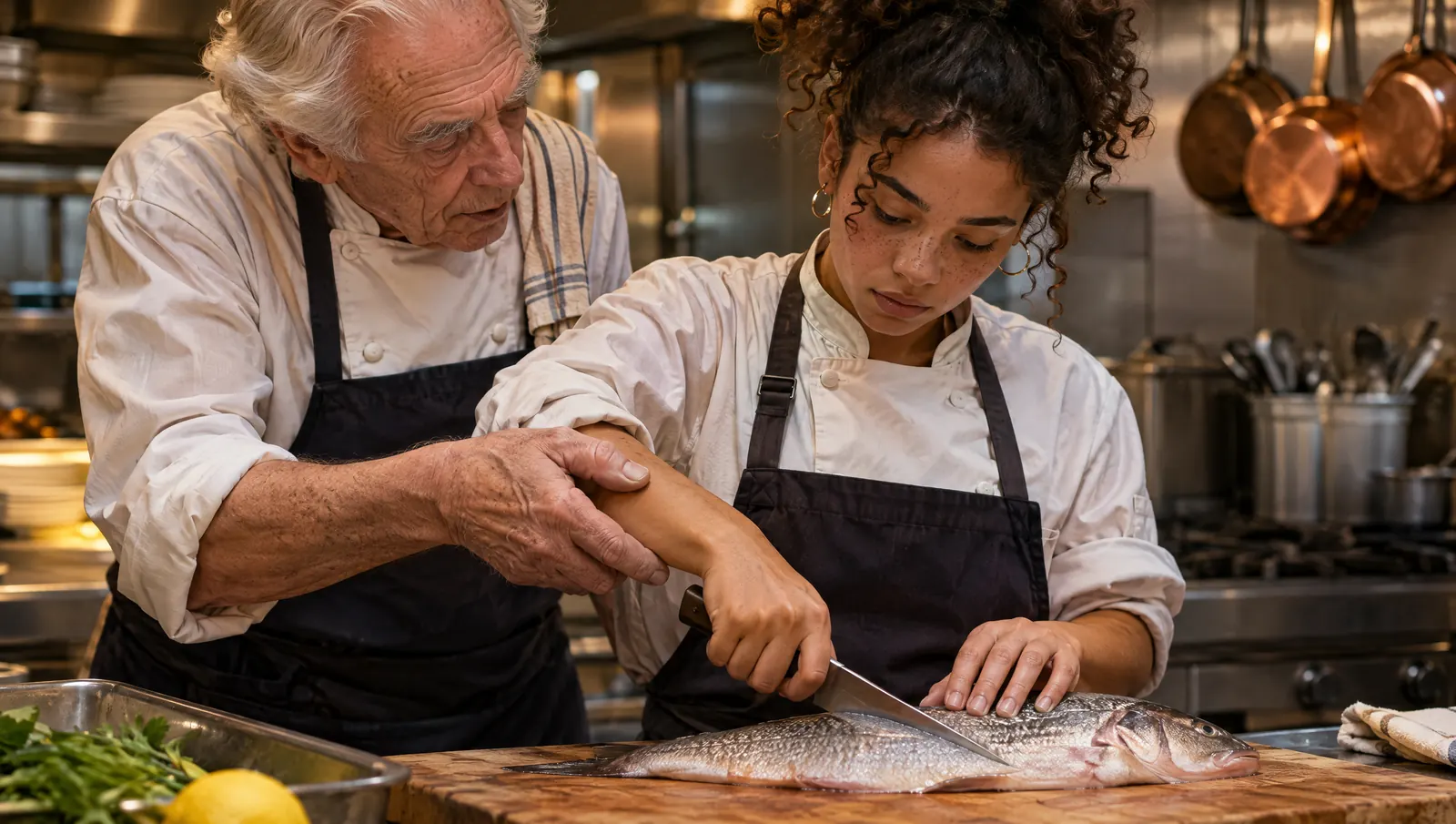
Raymond, the chef who mentors her, says almost nothing. He stands behind her, takes Daphné's wrist and lays the blade flatter. "Listen. You should hear it run along the bone. If you hear nothing, you're too high." The second fillet is better. The third is nearly clean.
Nothing Raymond passed on that morning was on the sheet. The sheet wasn't badly written; that kind of knowledge just doesn't fit into words.
Why not everything can be written down
What writes down well
Place, time, order, threshold. Where the filleting knives are, when the fish has to be ready, which side you fillet first, when the fish goes back into the fridge. This information is stable, it can be checked, and any new starter will forget some of it in the first weeks. It belongs on a sheet, a checklist, or in a tool that can find it again.
What you only get by watching
The long stroke, no sawing. The position of the wrist. How the chef holds the fish with the other hand. You can write "keep the blade flat", but the apprentice doesn't know what flat means until they have watched someone else's blade do it, up close, slowly if needed.
What you only learn by being corrected
The right pressure, the sound of the blade, the resistance of the flesh, the stretch of a dough, the feel of medium-rare meat. A mentor doesn't correct a skill in general: he corrects Daphné's, this morning, with her hand and her mistake. No sheet knows the mistake of the person reading it.
The mentor's time goes elsewhere
Every chef who trains people knows the paradox. You spend the day answering "where's the baking paper?" or "how much salt?", and there's no time left for the skill itself. Memory questions eat up hand time.
The right role for AI
That is exactly where a workstation assistant fits. It answers the questions that have a written answer: the next step, the weight, where something is stored, what's left on the checklist. It answers the twentieth time like the first, without a sigh. The mentor gets that time back for what only he can do.
How the assistant and the mentor share the work day to day is covered in the mentor and the assistant: who does what in training. The question here comes earlier: for a given skill, how do you tell what belongs to writing and what belongs to the hand?
What the French AFEST framework says
In France, workplace-based training has a legal framework called AFEST. Article D6313-3-2 of the French Labour Code says that it includes an analysis of the work activity, adapted for teaching where needed; the prior designation of a trainer who can act as a mentor; reflective phases, separate from the work situations themselves; and specific assessments of what has been learned, during or at the end of the training.
Two points stand out. Analysing the activity is precisely the breakdown described below. And the text names a trainer, a person, before anything starts. The law confirms what kitchens already know. For a fuller reading, see learning on the job: AFEST and a workstation assistant.
The method: write, show, correct
- Do the task slowly in front of a witness (a sous chef, an experienced colleague) and name each step out loud. The witness takes notes.
- For each step, ask one question: can it be said with a place, a moment, a number or an order? If so, it gets written.
- Anything that requires seeing a movement, an angle or a position gets shown. Note it as a demonstration to give, with what to watch ("the wrist, not the blade").
- Anything that depends on feel gets corrected. Note the most common mistake and the sign that gives it away ("flesh left on the bone: blade too high").
- Write success criteria anyone can check without argument: whole fillet, clean bone, skin intact.
- Allow five minutes after each attempt to talk it over: what the apprentice felt, what changed between two fillets. That is the reflective phase the law refers to.
- Leave sign-off to the mentor, dated, after several successes on different days.
A well broken-down skill produces a short sheet. If it runs to four pages, someone has probably tried to write down what should have been shown.
An example: filleting a sea bass
| Step | What gets written | What gets shown | What gets corrected |
|---|---|---|---|
| Set up the station | Board steadied on a damp cloth, sharp filleting knife, cold tray within reach | Station layout, left hand free | Nothing, if the sheet is followed |
| Cut behind the head | Where to cut, down to the backbone | The angle the blade goes in | Depth: too deep cuts the bone, too shallow loses flesh |
| Run along the bone | Head to tail, blade laid flat | The long stroke, no sawing | Pressure and the sound of the blade on the bone |
| Free the belly | Follow the ribs, don't force | How the blade follows the ribs | A torn belly, pulling instead of cutting |
| Pin-bone | Pin bones removed with tweezers, with the grain | Where to find them | Running a finger along to feel them |
| Check | Criteria: whole fillet, clean bone, straight back into the fridge | Reading the bone together | The apprentice's own judgement of the fillet |
A tool can recall the first column at any time. The other two need Raymond, standing next to Daphné.
The same grid works for other skills. A brunoise: the target size gets written, finger position gets shown, consistency gets corrected. Shaping a baguette: the dough weight gets written, the movement of the palms gets shown, the tension of the dough gets corrected. Plating: the layout gets written, the movement of the spoon gets shown. Knowing that a steak is medium-rare by touch barely gets written at all.
Common mistakes
- Writing everything down. A sheet that spends three paragraphs on the angle of the wrist gets read by nobody and teaches nothing.
- Treating the video as training. It shows a successful attempt, never the viewer's own mistake.
- Doing it for them. A mentor who takes the knife back saves a minute and delays the learning. Hand on hand, the apprentice is still the one cutting.
- Correcting with words only. "Lower" means nothing until the apprentice has felt what lower changes.
- Signing off after one success. One good fillet on a Tuesday morning doesn't yet mean the skill is there.
- Letting the tool absorb the contact. If the apprentice no longer asks the mentor anything, the time freed up has been wasted.
What to measure
- The time the mentor spends answering memory questions, logged over a week, before and after sheets and the assistant are in place.
- The number of attempts before sign-off, skill by skill, to spot which demonstrations need rethinking.
- The share of sign-offs given after several successes on different days rather than a single attempt.
Where Tsuno fits
Tsuno Compétences structures workplace-based training with an approach that includes the French AFEST method: skills pathways, learning objectives, theory and guidance, hands-on practice, workplace observation, skills assessments, progress tracking and managerial support. Skill levels are validated and dated by a manager, and the "can train others" level is earned through workplace-based training. Breaking down a skill fits naturally: the written part goes into theory and guidance, demonstration and correction into practice and observation, and the decision into human sign-off. For memory questions, Tsuno San lets the apprentice ask for a procedure or their next task by voice (San Voice is available as a demo). None of this replaces Raymond's hand. The point is that he has time to use it.
Further reading
On protecting your best people's time, read train people without turning your best employee into a full-time trainer. To see who can already do what, try how to build a useful restaurant skills matrix. For the bigger question, will AI deskill hands-on jobs?. And for what gets passed on to the whole team every night, the pre-service briefing in the age of AI. This topic belongs to the future of work in hands-on jobs, and 10 changes in the restaurant of tomorrow shows what is moving around the craft itself. The people best placed to pass it on are still the old hands, first allies of a knowledge-sharing tool.
Key takeaway
Break every skill down into what gets written, what gets shown and what gets corrected. Hand the first column to paper and the tool, and keep the mentor's time for the other two.
Frequently asked questions
Can you learn a kitchen skill from a recipe sheet or a video?
You can learn the order of steps, the equipment, the thresholds and what success looks like. The angle of the blade, the pressure, the resistance of the flesh or the feel of a cooked piece of meat are learned by watching someone do it, then being corrected while you do it yourself.
What is the right role for AI in training an apprentice?
Answering memory questions (a step, a temperature, where something is kept, what is left to do) so the mentor doesn't spend the day on them. The time saved goes to demonstrating, correcting and signing off, which stay human.
What does French law say about workplace-based training?
In France, article D6313-3-2 of the Labour Code requires an analysis of the work activity, a trainer designated in advance who can act as a mentor, reflective phases separate from the work itself, and specific assessments of what has been learned. The law puts a named person at the centre.
How do you break down a technical skill to teach it?
Do the task slowly in front of a witness and name each step. For each one, sort what can be written (where, when, which threshold), what has to be shown (a movement, an angle) and what can only be corrected on the apprentice's hand. Add success criteria anyone can check.
How many times should a skill be repeated before signing it off?
No single number fits every skill. Sign it off when the apprentice succeeds several times in a row, on different days, against the written criteria, without the mentor stepping in. One good attempt is not enough.
Keep reading
Pass it on without repeating
Finding the procedure nobody ever wrote down
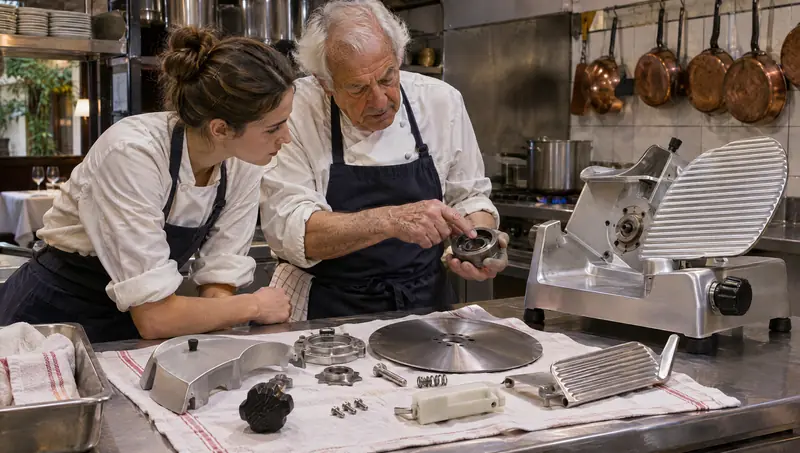
Slicer teardown, a hidden water valve: this know-how lives in one head. Have it dictated, filmed, checked, signed and dated, and it can be found at the station.
Pass it on without repeating
Old hands: the first allies of a knowledge-sharing tool
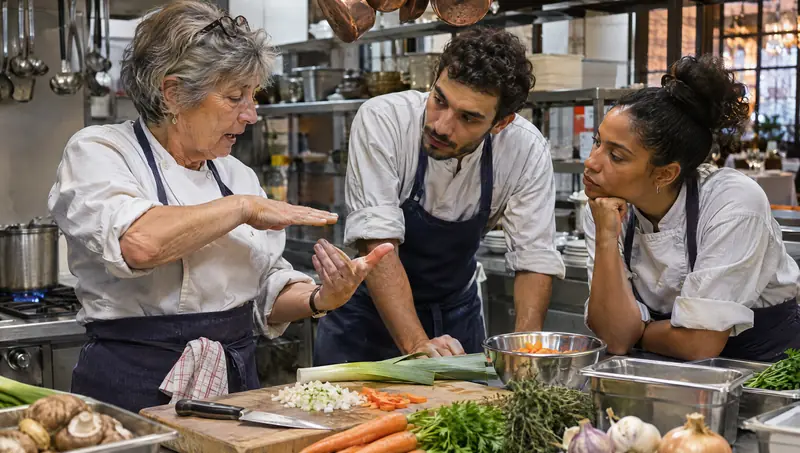
Veterans push back when a tool explains their own job to them. Make them authors and go-to people: signed methods, the right to correct, real recognition, time.
Pass it on without repeating
Seasonal staff and extras: ready from the first shift
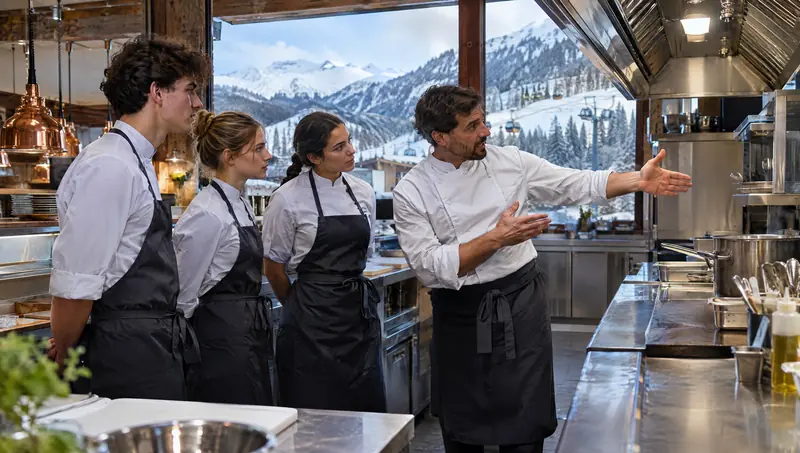
A seasonal hire is useful from the first shift when everything is ready first: access, welcome booklet, short station sheets, a buddy, and a planned season end.