

Veterans push back against a knowledge-sharing tool when it explains their own job to them, threatens their place or ignores them. They become its first allies when you turn the logic around: they author the methods for their station, signed with their name if they want, they keep the right to correct them, their role as the go-to person is recognized and time is set aside for them to pass skills on. One rule has to be stated from day one: the tool is not there to assess them.
Monday, 2:30 p.m., a meeting that starts badly
Aminata has just taken over the kitchen. She gathers the team to introduce the new tool: head office recipes, checklists, an assistant people can ask questions at their station. Sidonie has run the cold station for thirty-one years. She listens, arms folded, then reads the mayonnaise sheet on the tablet.
"That's not how we make it here. And a tablet isn't going to teach the kids how to whip it."
Aminata realizes she started at the wrong end. The next day she tries again with Sidonie alone, somewhere quiet, two coffees on the table. She no longer pitches a tool. She asks: "The cold station sheets, would you be willing for them to be yours? Your name on them if you agree, and you're the one who says when they're wrong." She also blocks out Tuesday from 3 to 4 p.m. on the schedule, with two junior cooks, so Sidonie can show them the station's techniques.
Three weeks later the mayonnaise sheet has changed. It reads "Method: Sidonie". And when a junior cook asks the assistant how to rescue it when it splits, the sheet ends with a line she added: "If it won't come back, come and find me."
(Scene and characters are fictional.)
Why veterans resist, and why they are often right
Someone is explaining their own job to them
The first reflex in any tool rollout is to fill the tool: recipes from head office, from a template, from another location. For someone who has done the job for twenty years, reading a sheet that is thinner than their actual practice is insulting. It is also a signal: if the sheet does not match what happens at the station, it is wrong, and the veteran is the first to notice.
The fear of being replaced
What the veteran knows, nobody else does. That is their value in the business, sometimes their protection. Asking them to write everything down can feel like a handover before being shown the door. A speech will not ease that fear. It eases when the written record strengthens their place instead of making it redundant.
A tool that ignores them
An assistant that answers new hires without ever pointing them to the veterans slowly takes away the questions people used to bring them. For a veteran, being asked is a mark of respect. When nobody comes by any more, they conclude the tool has replaced them, and they fight it.
The fear of being watched
A veteran has seen time clocks, cameras and dashboards come and go. They wonder what this one will say about them: whether it counts their mistakes, compares them with the young ones, reports back to the owner. Until that question has a clear answer, they stay wary, and they are right to ask it.
Make the veteran the author and the go-to person
Here is the approach we recommend. It starts before the tool is installed, not after.
- Talk to them first, one to one. Before the team meeting, a private conversation: what the project is meant to fix, what you expect from them, what they think. A veteran told at the same time as the cook who started on Monday feels treated the same way.
- Give them the method for their station. The cold station sheets belong to the person who runs it best. They do not write them alone at night: they demonstrate, someone else writes, they review. The capture technique itself is covered in finding the procedure nobody ever wrote down.
- Sign it with their name, if they want. "Method: Sidonie", with the date and the name of whoever signed off on safety. The signature says where the method comes from and who to ask. It stays optional.
- Give them a real right to correct. When they spot a wrong step, they flag it, the sheet is fixed for everyone and the date changes. If their correction sits for three weeks, they will stop making them. See a wrong step in a checklist: flag it, fix it for everyone.
- Recognize their role as the go-to person. They become the named reference for their station's techniques. Say it in front of the team and record it in the skills, with a level stating they can train others, validated and dated by a manager.
- Set time aside. A training slot on the schedule, with the people they are training. Training squeezed into service becomes a chore, and the new hire can feel it.
- Say what the tool will not do to them. It does not rate them, compare them with others or report their mistakes as a judgment. Say it before they ask, then keep your word.
The last word on technique, not on safety
The method belongs to the veteran, the sign-off to the person in charge. If Sidonie's sheet contradicts an equipment manual or a food safety rule, the head chef decides and explains why. Stating this split clearly keeps a veteran who has become an author from feeling overruled at the first disagreement.
What the veteran gains, and what they must be free to refuse
A veteran who takes on this role gains something concrete. They repeat the same explanations less, written once. New hires come to them for what really matters, the technique and the doubts. Their knowledge is visible and credited.
They must also be free to say no. Not to put their name on a sheet, not to be filmed, not to train anyone this month because the load is too heavy. Forced on someone, the go-to role produces rushed sheets and a hurried mentor.
French law on workplace-based training points the same way. For an AFEST (France's formal on-the-job training scheme), article D6313-3-2 of the French Labour Code requires a trainer able to act as a mentor to be designated beforehand. The person who trains is chosen in advance, not by default because they have been there longest.
Veterans' fears, and the answers that work
| What the veteran fears | What feeds the fear | Concrete answer | Who handles it |
|---|---|---|---|
| "They're going to teach me my job" | Sheets from elsewhere, thinner than their practice | They author the sheets for their station | The manager, before rollout |
| "Once it's written, they won't need me" | Being asked to write everything with nothing in return | Their name on the method, their go-to role named | The manager, in front of the team |
| "Nobody will come to me any more" | A tool that answers everything | Sheets point back to them for what they don't settle | The veteran, in their own sheets |
| "It'll be used to watch me" | Silence about how data is used | A stated, written rule: the tool assesses no one | The owner |
| "I don't have time" | Training squeezed into service | A fixed slot on the schedule | The manager, every week |
| "My corrections go nowhere" | Flags that never get answered | Corrections applied quickly, date updated | Whoever maintains the sheets |
Common mistakes
- Introducing the tool to the whole team at once. The veteran learns about their new role at the same moment as everyone else and experiences it as being sidelined.
- Filling the tool before asking them. Every wrong sheet they find becomes an argument against the project.
- Making the signature mandatory. A name imposed recognizes nothing.
- Promising recognition that never comes. If the training slot disappears every time it gets busy, the message is clear, and it is the wrong one.
- Leaving doubt about assessment hanging. A single rumor that "it goes straight to the boss" is enough to shut a veteran down for months.
What to measure
- The share of each station's sheets authored or reviewed by a veteran. If it stays low, the tool is filling up without them.
- The number of corrections veterans suggest in a month, and how long they take to be applied. A veteran who corrects has made the tool their own.
- Training slots actually held, compared with those on the schedule. That is the proof, or not, that the role is recognized.
Where Tsuno and San fit in
In Tsuno, procedures and files are organized by location. Skills are validated and dated by a manager, and the "can train others" level is earned through on-the-job training: a written way of recognizing that a veteran passes skills on. The skills matrix shows who can do what, location by location, and so who can be the go-to person for which task. The weekly schedule takes the training slot like any other shift. Tsuno Compétences then organizes the pathway: learning objectives, hands-on practice, observation in real situations, assessment of what has been learned.
Tsuno San makes the sheets available at the station, answering from what the team has written and approved, within the permissions of the person asking. When a sheet is missing, it says so instead of making something up. Voice interaction, San Voice, is currently shown in demos.
On assessment, the rules are the ones on our Trust page. San assesses no one and never rates an employee in place of their manager. The app's monthly leaderboard, which keeps teams engaged with points for training, punctuality and completed tasks, is never passed to the assistant: tell your veterans exactly that.
Part of the approach still needs tooling. Showing the method's author on every sheet, letting the veteran suggest a correction from their station, notifying the author when their sheet is changed: that is what a good knowledge-sharing tool should do, and it is what we are working on. We run the demo on your own stations.
Further reading
Once the veteran is the go-to person, you still need to split their role from the tool's: that is the subject of the mentor and the assistant: who does what in training. For the wider picture of pushback, read why teams reject new tools. To keep training from wearing out your best people, see train people without turning your best employee into a full-time trainer, and to keep the team talking around the tool, the place of people when the tool has the answer. This role for old hands is part of the future of work in hands-on jobs, and links to what no AI will replace when passing on a skill.
Key takeaways
A veteran fights the tool that ignores them and defends the one that carries their name. Give them the method along with the right to correct it, then tell them plainly that the tool is not there to assess them.
Frequently asked questions
Why do experienced employees resist new tools?
Often for good reasons: the tool arrives with procedures written without them, explaining a job they have done for twenty years. They also fear being replaced once their knowledge is on paper, or being monitored. The pushback is rarely about the screen. It is about the place they are left with.
How do you involve a veteran employee in a new digital tool?
Give them authority over the method for their station before you install anything: they author the procedures, which carry their name if they wish, they can correct them, their role as the go-to person is recognized, and time is set aside on the schedule for them to pass skills on.
Does writing down their know-how make a veteran replaceable?
No. A procedure gives the order of the steps. It does not demonstrate the technique, correct a beginner or judge an unexpected situation. The veteran who wrote the method becomes the person people come to with the questions the procedure does not settle.
Can a knowledge-sharing tool be used to assess veterans?
It should not be. In Tsuno, the assistant assesses no one and never rates an employee in place of their manager. The app's monthly leaderboard, based on points for training, punctuality and completed tasks, is never passed to the assistant. Tell your veterans what the tool does with their contributions, and what it does not do.
How do you recognize a veteran's role in training others?
Through visible actions: their name on the methods they passed on, a skill level stating that they can train others, validated and dated by a manager, and a training slot on the schedule instead of time stolen from service.
What if a veteran refuses to take part?
Do not force it or work around them. Listen to what worries them, suggest a single task to start with, and leave them free not to sign. A veteran who sees their method respected through a colleague often changes their mind on their own.
Keep reading

Pass it on without repeating
A wrong step in a checklist: flag it, fix it, for everyone
A wrong step is flagged from the checklist itself, becomes a proposal the manager approves, then a dated new version the whole team receives.
Pass it on without repeating
Finding the procedure nobody ever wrote down
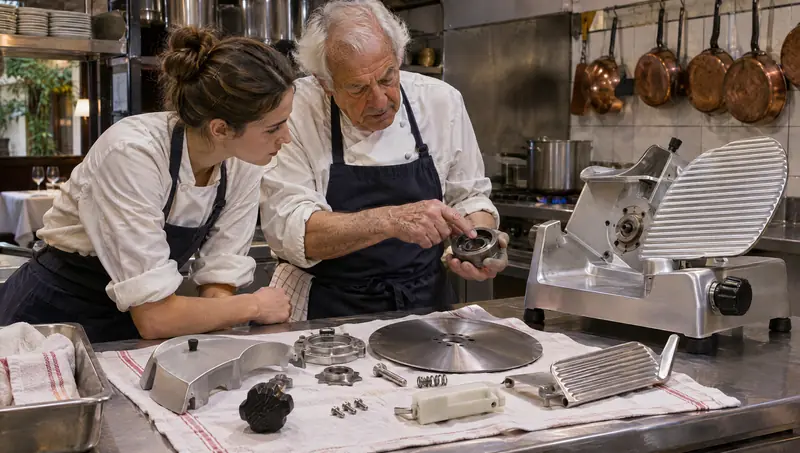
Slicer teardown, a hidden water valve: this know-how lives in one head. Have it dictated, filmed, checked, signed and dated, and it can be found at the station.

Pass it on without repeating
Back from leave: “what changed since my last shift?”
Back from time off, you learn what changed in scraps or through a mistake. A good tool lists what affects your station, dated and sourced, and nothing else.