
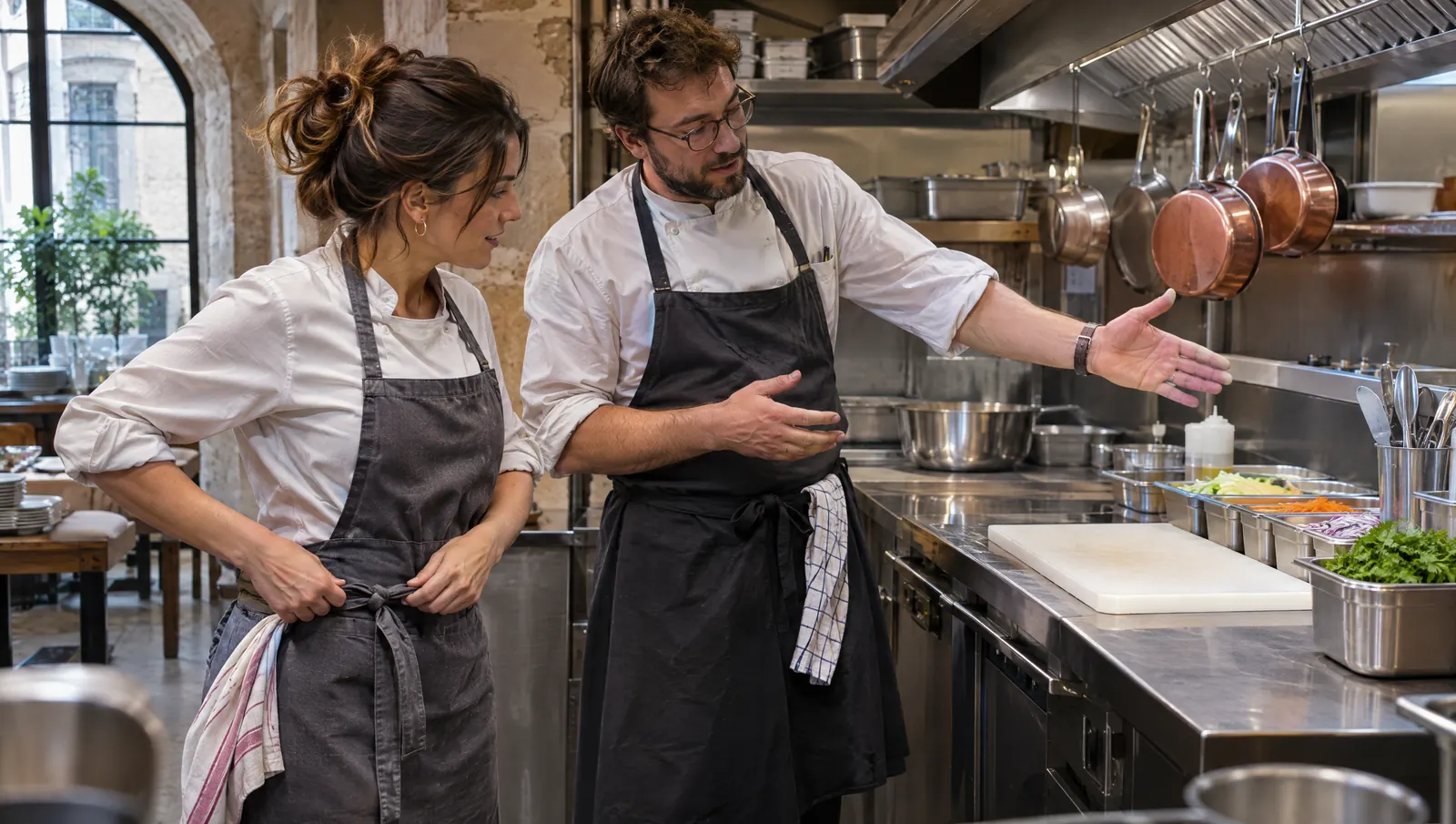
When you come back from time off, you learn what changed in scraps, in passing conversations, or through a mistake in the middle of service. There is no need to reread everything: what you need is the list of changes that affect your station since your last shift, each with its date and its source, and nothing else. The rest takes ten minutes with the chef.
Monday, 8:05 a.m., the first shift after three weeks
Nour runs the hot station. She is back from three weeks of leave. In the locker room, she reties her apron while Alexis, the commis, shows her what has moved: the containers are no longer stored in the same order, and the combi oven was replaced last week.
In twenty minutes she learns four things by word of mouth. The new menu started ten days ago. The oven has different programs. A new dishwasher has joined, and his English is still basic. Since an inspection, every container going into the walk-in must be wrapped and labeled first.
The fifth change, nobody mentions, because everyone already knows it. The sauce for the fish dish has a new sheet: Zoé, the head chef, replaced the cream with a brown butter made with toasted hazelnuts. At 12:10, Nour makes the sauce the old way. Zoé stops her at the pass. The plate never leaves. But the menu sauce now contains tree nuts, and what the floor team tells guests is based on the new sheet, not the one in Nour's head.
(Scene and characters are fictional.)
Why you always come back behind your own kitchen
Changes are told to whoever is there
A decision gets made at the pass, at the pre-shift briefing, between services. It is told to the people present. The one on leave was not there, and nobody thinks to repeat it three weeks later. The team absorbed the change so fast it forgot it was new.
The group chat has scrolled away
If the change was announced in a group chat, it is buried under two hundred messages: shift swaps, delivery photos, jokes. Nobody scrolls back three weeks over their morning coffee. Announced in a chat, a procedure is filed nowhere.
Nobody knows what an absent colleague missed
The manager knows what they decided. They do not know what each absent person has or has not seen. Without a list, they improvise a recap, and a recap from memory always leaves something out.
Not everything carries the same weight
A new storage tub and a new allergen in a sauce are not equally serious. In a verbal catch-up, they come in random order, in the same tone. The serious change gets lost between two details.
The five kinds of change that matter when you return
For a kitchen station, almost every change falls into one of five families. That is the grid to follow, in this order of seriousness.
| Kind of change | Example | Risk if missed | Where it should be written |
|---|---|---|---|
| Hygiene and safety | Containers wrapped and labeled before the walk-in | Non-compliance, lost traceability | Station checklist or procedure, dated |
| Recipes and allergens | Cream replaced by a hazelnut brown butter | Wrong information given to a guest | Approved, dated recipe sheet |
| Equipment | New oven, new programs | Failed cooking, damaged equipment | Equipment sheet, linked to the station |
| Station setup | Containers moved, new prep order | Lost time, things forgotten during the rush | Prep checklist |
| Team | New dishwasher, new sous-chef | Instructions poorly passed on, avoidable friction | Schedule, and an introduction by the manager |
A menu change often touches several families at once: new sheets, new allergens, new prep. It deserves to be handled sheet by sheet, not with a single "the menu changed".
Allergens go beyond the kitchen. Under EU law, the food information regulation (Regulation (EU) No 1169/2011) sets the list of fourteen allergens that must be declared, and in France restaurants must be able to tell guests when they are present in the dishes served. A sheet changed while a cook was away means guest information has changed.
What a good tool should do when someone returns
Today, catching up depends on the goodwill of whoever was there. A good tool can do better, as long as it follows a few simple rules.
- Start from the last real shift. Not from a date typed from memory: from the last shift actually worked, which the tool already knows through the schedule and time-off records.
- Keep only what concerns that person. Their site, their station, the equipment they use, the sheets they follow. A front-of-house procedure change does not belong in the hot station's list.
- Date and source every line. "Fish sauce sheet, changed on the 4th by Zoé: cream replaced by hazelnut brown butter." Who, when, which sheet. Without a source, a line is just one more rumor.
- Sort by seriousness. Hygiene, safety and allergens first, setup next, team news last.
- Open the sheet itself on sensitive points. On an allergen or a temperature, the tool shows the approved, dated sheet. A summary can slip in a word that changes the meaning.
- Say what it does not know. If a change was decided verbally and never written down, the tool cannot list it. It should say so clearly rather than present the list as complete.
- Stay a help, not a check. The list is for the person coming back. It must not turn into a record of what they did or did not read, open to others.
That seventh point often decides whether the list gets used. A team that feels its reading is being checked will skim. A team that saves real time will open the list on its own on Monday morning.
The return in four steps, for the manager
The conversation with the chef is still needed; the list just keeps it focused on what matters. This routine fits in fifteen minutes.
- The evening before or that morning, the employee goes through their list of changes, at their own pace, on their phone or the site tablet.
- Before the shift, ten minutes with the chef or sous-chef, standing at the station. Go over the serious changes, sheet in hand, and answer questions.
- For new equipment, a demonstration by someone who has already used it. You learn an oven by running it, not by reading about it.
- At the end of the shift, one simple question: "Is there anything we should have told you and forgot?" The answer shows what was never written down.
Common mistakes when someone comes back from leave
- Making them reread everything. Thirty sheets to reread guarantees the two that changed will go unnoticed.
- Relying on the group chat. What was announced there three weeks ago cannot be found today.
- Leaving the handover to a commis. Alexis knows the station, but he does not know everything that changed or why. Serious changes are for the chef or sous-chef to pass on.
- Changing a sheet without dating it. If the sauce sheet does not say when it changed, nobody can tell it changed.
- Keeping the decision verbal. A change that only exists in the head chef's mind will not appear in any list, even in the best tool.
- Forgetting short absences. A three-day weekend during a menu change is enough to miss a sheet.
What to measure
- Mistakes on the first shift after an absence of more than a week, noted simply by the manager: what happened, and whether the change was written down anywhere.
- The share of sheet or procedure changes dated at the moment they are made, over the last month.
- The answer to the end-of-shift question. If people often say "nobody told me", the list is incomplete, and decisions are still being kept verbal.
Where Tsuno and San fit in
Part of what is needed already exists in Tsuno. Procedures and files are stored by site. Opening, closing and prep checklists keep their history. Recipe sheets, the logbook and notes are dated and searchable. Each employee sees their schedule on their phone, and time off is tracked there. Tsuno's assistant answers questions in plain language, from Tsuno or from your usual AI assistant, within the person's permissions. The details are on the Features page.
With Tsuno San, Nour can ask at her station, hands full: "How do we make the fish sauce?" San opens the restaurant's own sheet. As for the hazelnuts, not answering from memory on an allergen is one of San's design principles (we explain why in allergens: why no tool should answer from memory): with no approved sheet, it sends her to the head chef. That voice exchange, San Voice, can be seen today in a demo.
What remains to be built is the Monday morning question: "What changed since my last shift?", answered with a list filtered by station, sorted by seriousness, dated and sourced. That is what we are building, and we will not present it as available until it is. The underlying rule is already in place: nothing gets listed that was never written down. That is why the first job is to date every sheet when it changes.
Further reading
For everything San does, read the pillar page Tsuno San, the work companion for frontline teams. A change must be written down before it can be found: see clear, SMART instructions: what AI changes in handing over work and explain it once: how to make a standard live. For knowledge that was never written down at all, read finding the procedure nobody ever wrote down. And for the same problem seen by new hires, why new restaurant employees often say "nobody told me".
Key takeaways
While you were away, the kitchen kept going without you, and your colleagues' memory is not enough to bring you up to date. A short list of your station's changes, dated and sourced, followed by ten minutes with the chef, prevents the first-shift mistake.
Frequently asked questions
How do you catch up after three weeks off in a restaurant kitchen?
Start from your last shift, not from memory: what changed on the menu, the recipe sheets for your station, the equipment, the team and the hygiene rules. The best format is a short, dated written list, followed by ten minutes with the chef or sous-chef before you start.
Who should tell an employee what changed while they were away?
The manager is responsible, but nobody can remember everything. The useful rule is that every change is written down when it is decided, with its date and the sheet it affects. That way the returning employee can find it without relying on anyone's memory.
Should someone back from leave reread every procedure?
No. Rereading everything buries the two or three changes that matter. Show only what was modified since their last shift, starting with anything about safety, allergens and hygiene.
Is a recipe change during a cook's absence an allergen risk?
Yes, if an allergen was added or removed. The returning cook must see the approved, dated recipe sheet, not a summary from memory. Under EU law, restaurants must be able to tell guests which of the 14 regulated allergens are in the dishes they serve.
Can Tsuno tell an employee what changed since their last shift?
Today, Tsuno keeps procedures, checklists, recipe sheets and notes dated and searchable, and its assistant answers questions in plain language. An automatic summary of changes since your last shift, filtered by station, is what we are building.
Keep reading
Pass it on without repeating
A wrong step in a checklist: flag it, fix it, for everyone
A wrong step is flagged from the checklist itself, becomes a proposal the manager approves, then a dated new version the whole team receives.

Pass it on without repeating
Clear, SMART instructions: what AI changes in handing over work
A useful instruction says who, what, when, how to check and until when. AI helps rephrase it and spot what is missing; the manager reviews and approves it.
Pass it on without repeating
Finding the procedure nobody ever wrote down
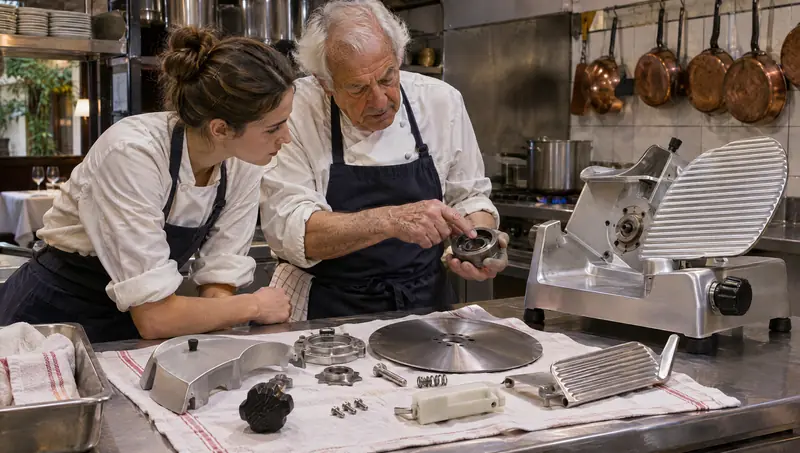
Slicer teardown, a hidden water valve: this know-how lives in one head. Have it dictated, filmed, checked, signed and dated, and it can be found at the station.