
A useful instruction says who does what, when, how you check it was done, and until when it applies. "Keep an eye on the fridges" says none of that. AI can help close the gap: rephrase a spoken instruction, ask for what is missing, link it to the existing sheet and date it. The manager reads it and approves it. AI never decides the content for them.
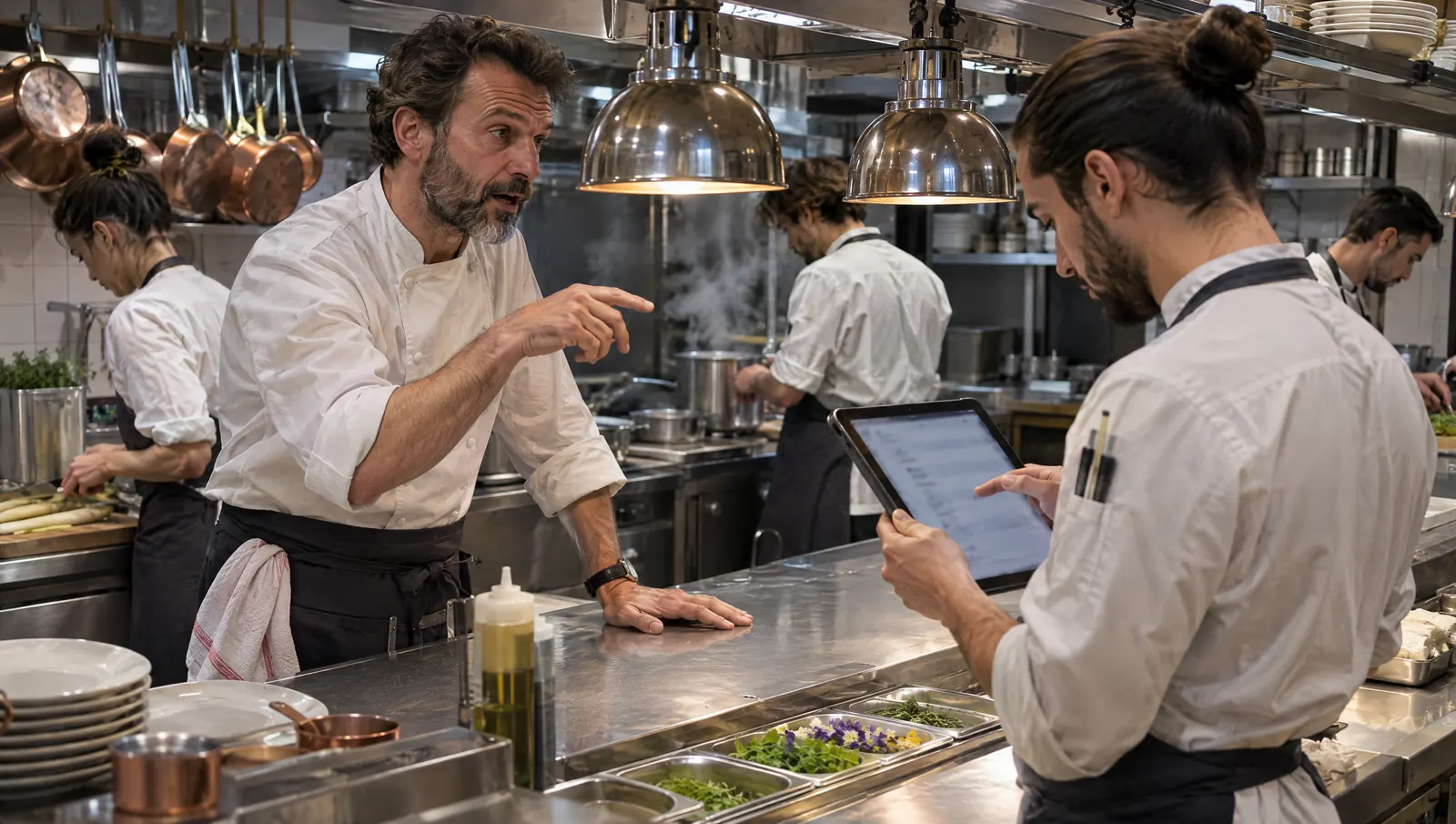
Tuesday, 11:20 a.m., at the pass
Forty minutes before service. Sébastien, the chef, found out this morning that the door seal on the walk-in cooler is leaking. The engineer is coming on Friday. He calls out to the kitchen: "Keep an eye on the fridges tonight, OK?"
Everyone nods. Fatou, on the closing shift, thinks he means the reach-ins on the cold station. The hot line thinks it is a closing job, so not theirs. Hugo, the sous-chef, understands that temperatures need checking, but not how often.
Hugo picks up the tablet and reads back what Sébastien just dictated, rephrased: "Walk-in cooler: temperature reading at 6 p.m. and 10 p.m. Who is doing it? What happens if it is above the limit? Until when?" Sébastien answers in ten seconds: "Fatou. Tell Hugo. Until Friday." The remark thrown out at the pass has become an instruction.
The scene is fictional. The misunderstanding happens every day in real kitchens.
Why vague instructions are the norm
We speak the way we think
The chef has had the problem in mind since the morning. To him, "the fridges" obviously means the walk-in with the bad seal. To the team, who never got that information, it is one more sentence. A spoken instruction rarely carries the context that makes it clear.
Nobody is named
"Keep an eye" is aimed at everyone, so at no one. Everyone assumes someone else has it. It is the most common gap and the most expensive.
Nothing says how to check
Nobody can tick "keep an eye". Without a way to check, neither the team nor the chef knows the next day whether the instruction was followed.
The instruction has no end
A temporary instruction with no end date becomes either a permanent rule that nobody understands any more, or something forgotten after two days. Either way, it stops being reliable.
This is usually when the repeating starts. In how many times should you repeat an instruction before changing the system, we describe the point where repetition becomes the symptom of a broken channel.
SMART, kitchen edition
The SMART method comes from an article by George T. Doran published in Management Review in November 1981, "There's a S.M.A.R.T. way to write management's goals and objectives". It was written for management objectives, but it works very well for a kitchen instruction once you strip out the seminar vocabulary.
- S for specific: what, and on what. Not "the fridges": the walk-in cooler. Not "clean it better": take apart and clean the blade and carriage of the slicer.
- M for measurable: how you know it is done. A reading logged, a box ticked on the closing checklist, a label on the pan. If you cannot check it, it is not an instruction yet.
- A for assigned: who. In Doran's original version, the A meant "assignable", something you can give to a named person. It is the most useful letter in a kitchen. A station or a name, not "the team".
- R for realistic: doable during service. An hourly reading in the middle of the rush will not happen. Two readings at quiet times will.
- T for time-bound: when, and until when. The time or the moment in service, and the end date if the instruction is temporary.
Doran himself said that not every objective needs all five criteria. In a kitchen, three are essential: who, when, and how you check. The other two keep you away from impossible or vague instructions.
What AI changes, and what it does not
Writing a precise instruction takes two quiet minutes. Before service, those two minutes do not exist. That is where an assistant helps: it handles the wording while the chef stays in charge of the substance.
- Rephrase a spoken instruction. The chef talks the way he talks. The assistant suggests a short written version with one action, one owner, one moment.
- Ask for what is missing. "Who is doing it?", "By when?", "How do we check?". A good tool asks instead of making up the answer. If it fills the gaps on its own, it replaces the chef's decision with a guess.
- Link the instruction to the existing sheet. If the kitchen already has a slicer sheet or a closing checklist, the instruction attaches to it instead of creating a second version of the truth.
- Date it. Who gave it, when, and until when it applies. A dated instruction can be found again and retired cleanly.
- Let the manager review and approve. Nothing goes out until the person giving the instruction has read and confirmed it. They are the one who answers for it in front of the team.
What AI does not do: decide what needs doing, set a temperature limit or an allergen rule on its own, or assign an instruction to someone the manager has not chosen.
Five real kitchen instructions, before and after
| Spoken instruction | What is missing | Useful instruction |
|---|---|---|
| "Keep an eye on the fridges tonight." | Which unit, who, when, what to do if out of range, until when | Walk-in cooler: reading at 6 p.m. and 10 p.m. by Fatou, logged in today's temperature log. Above the limit, tell Hugo. Until Friday, when the engineer comes. |
| "Wrap the pans properly." | Which pans, who, how to check | Every hotel pan going into the walk-in is wrapped and labeled (product, date, initials) before storage, by the station storing it. Sous-chef checks at close. |
| "Watch the allergens on the special." | Who approves, when, where the information is | Today's special: allergen sheet approved by the chef before 11 a.m. and posted at the pass. Front of house uses it and never answers from memory. |
| "Clean the slicer better." | Which steps, when, who, how to prove it | Slicer: taken apart and cleaned following the Slicer sheet after every service, by the cold station. Box ticked on the closing checklist. Hugo demonstrates it on Monday at 3 p.m. |
| "Change the fryer oil more often." | Rule for changing, who tests, where it is logged | Fryer: oil tested at opening by the hot line, logged in the frying oil log. Changed if the test fails. Review with the chef in two weeks. |
None of these instructions runs past four lines. What makes them precise is answering who, when, and how you check.
Common mistakes
- Confusing precision with length. Fifteen lines do not make an instruction clearer; mostly they make it less read.
- Letting the tool fill the gaps. If the assistant picks the owner or the time on its own, it is making a decision that belongs to the chef. It should ask.
- Posting the instruction in a group chat and stopping there. The thread scrolls on and the instruction disappears. We show why in a procedure buried in WhatsApp is not a procedure.
- Creating a new sheet for every instruction. If the slicer sheet exists, correct it or attach the instruction to it. Two sheets on the same subject end up contradicting each other.
- Forgetting the end date. A temporary instruction that never ends clutters the kitchen and makes people trust the others less.
- Approving without reading. A rephrasing can slip in a word that changes the meaning, especially on a temperature or an allergen.
What to measure
- The share of instructions that name an owner and a due date, across the last ten you gave. It is the first indicator and often the most telling.
- The number of instructions repeated more than twice in a month. An instruction you have to say again is badly written or badly stored.
- The share of lasting instructions attached to a sheet or checklist, rather than left in a message.
Where Tsuno and San fit in
In Tsuno, an instruction already has places to live. A one-off instruction can become an assigned task with a due date and, if needed, recurrence; it shows up on the Today page of the person concerned. A lasting instruction belongs in the site documents or in an opening, closing or prep checklist, with its history. Temperature and frying oil logs are entered on the tablet, and a reading out of range notifies the site's managers. The details are on the Features page.
Tsuno's assistant answers questions in plain language and can prepare an action, such as a task: it drafts it, summarizes the effect, and nothing runs without your confirmation. It is recorded. Tsuno San is the intelligent voice assistant for teams, connected to procedures, tasks, checklists, routine checks and equipment; San Voice, the voice interaction, is available in demo. San acts within the person's permissions: it only sees and does what they can already see and do in Tsuno.
As for the rest, systematically turning a spoken instruction into a SMART one, asking the missing questions and suggesting the sheet to attach it to is what a good tool should do, and it is what we are working on. We would rather show you in a demo, on your own instructions, than promise it here. Either way, the instruction stays the chef's. Tsuno brings the facts together. People decide.
Further reading
For the big picture of AI on the management side, read the pillar page AI for frontline managers: analyse, advise, reassure, and for San as a whole, Tsuno San, the work companion for frontline teams. On the shape of the messages you send your team, see talking to your team: shorter, clearer messages. To turn an instruction into a standard that lasts, read explain it once: how to make a standard live, and to know when to stop repeating yourself, how many times should you repeat an instruction before changing the system. A clear instruction still has to be followed up over time, which is the subject of deadlines and reminders: following up without a spreadsheet.
Key takeaways
A useful instruction answers three questions: who, when, and how you check it was done. AI helps ask them and shape the instruction when the chef has no time, but the chef is the one who reads it, approves it and answers for it.
Frequently asked questions
What is a SMART instruction in a kitchen?
An instruction that says exactly what to do and on which piece of equipment, how you check it was done, who does it, whether it is doable during service, and by when or until when. It fits in three or four lines.
Why is keep an eye on the fridges not enough?
Because nobody knows who should do what, on which fridge, at what time, or how to prove it was done. Everyone assumes someone else has it, and the next day nobody can say whether the instruction was followed.
Can AI write instructions instead of the chef?
It can rephrase a spoken instruction, spot what is missing and suggest a precise version. It does not decide the content: the chef or manager reads it, corrects it and approves it before it goes to the team.
Does every instruction need all five SMART criteria?
No. The author of the method himself said that not every objective needs all five. In a kitchen, the three you cannot skip are who, when, and how you check.
Where should an instruction live once it is clear?
If it is a one-off, in an assigned task with a due date. If it has to last, in the sheet or checklist for the station concerned, dated, so it does not live only in a chat message or in the chef's head.
Keep reading
Pass it on without repeating
A wrong step in a checklist: flag it, fix it, for everyone
A wrong step is flagged from the checklist itself, becomes a proposal the manager approves, then a dated new version the whole team receives.
Pass it on without repeating
Back from leave: “what changed since my last shift?”
Back from time off, you learn what changed in scraps or through a mistake. A good tool lists what affects your station, dated and sourced, and nothing else.
Pass it on without repeating
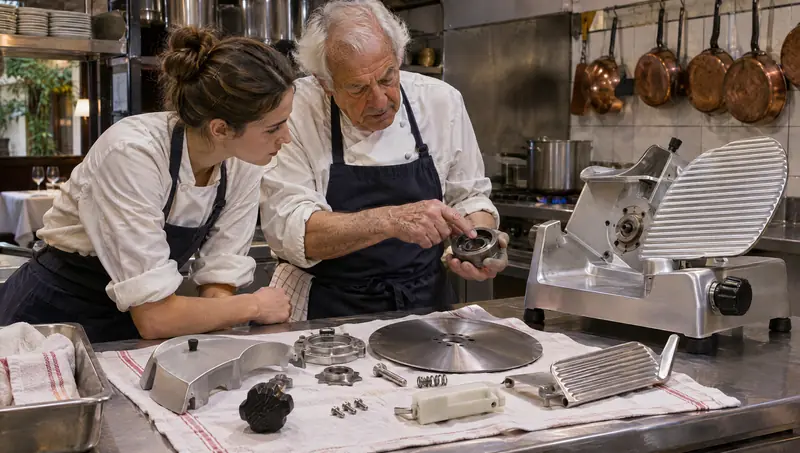
Finding the procedure nobody ever wrote down
Slicer teardown, a hidden water valve: this know-how lives in one head. Have it dictated, filmed, checked, signed and dated, and it can be found at the station.