
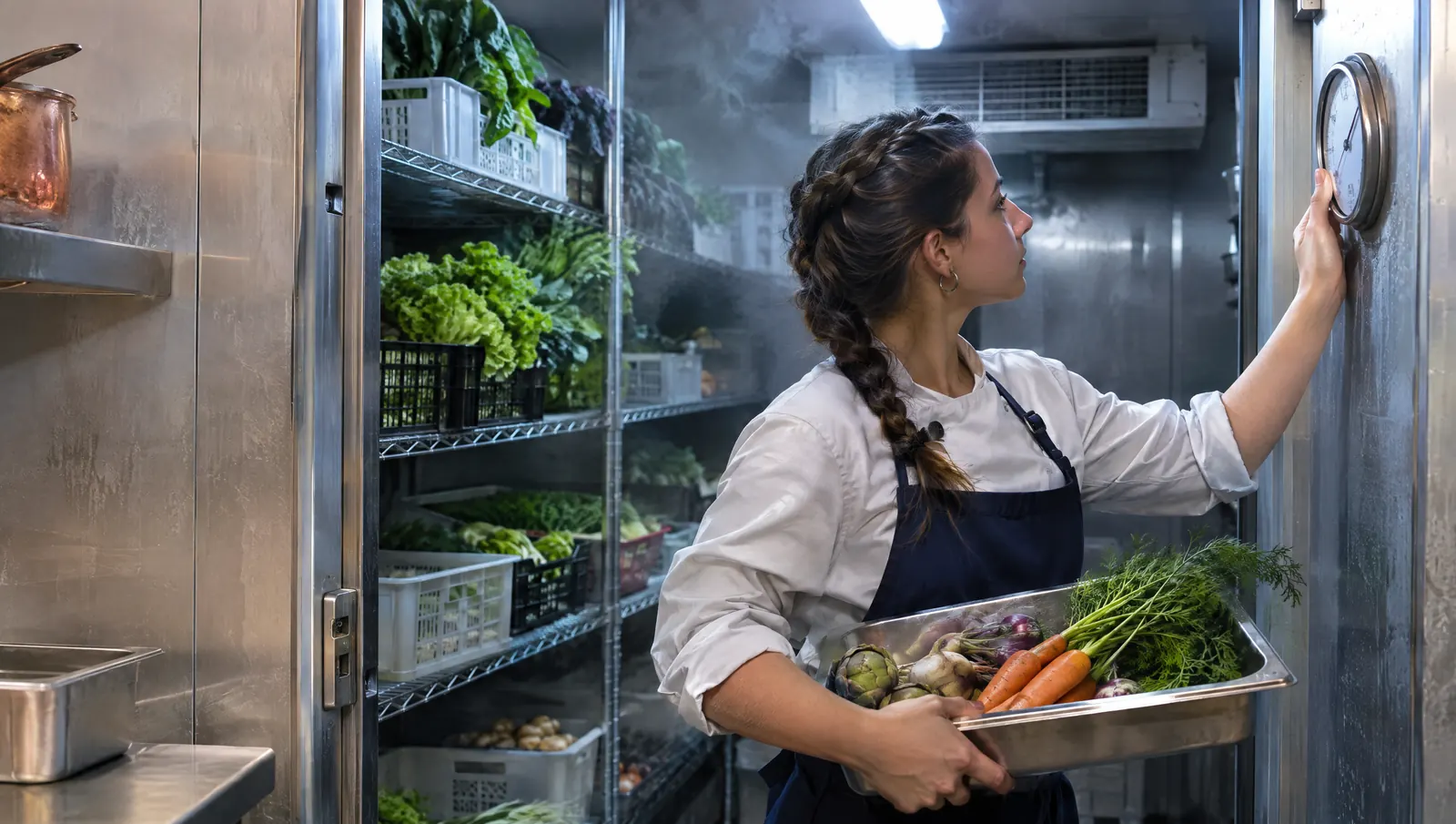
A temperature check is only worth something if it is logged at the moment the thermometer is read, by the person reading it, at the real time. Saying it aloud during the task, rather than writing it in the evening from memory, keeps those three pieces of information. A good tool repeats the number before saving it, alerts the manager if the value is out of range and asks what was done about it.
Tuesday, 10:05 a.m., at the walk-in
Clémence opens the walk-in fridge. She has a tub of vegetables in her left hand and is holding the door with her shoulder. The thermometer reads 3°C. The log book hangs by the sink at the other end of the kitchen, with a pen that no longer writes on damp pages. She tells herself she will fill it in later.
At 4 p.m., Florian, the head chef, points out that the logs are empty. Clémence grabs the book. Walk-in, 10 a.m.: "3", she is almost sure. The prep fridge, she looked at it around noon, or maybe not. She writes "4", like yesterday. The pages carry grease stains, boxes filled by the same hand at the same time, and a row of numbers that never move.
Nobody is cheating. The check really was done at 10:05. The writing happened six hours later.
With San, the same moment takes a few seconds. In front of the open door, Clémence says: "Temperature check, walk-in fridge, 3 degrees." San replies: "3°C for the walk-in fridge, is that right?" She says yes and closes the door. The reading is saved at 10:05 a.m., under her name.
(Scene and characters are fictional.)
Why the greasy pen always comes out at the end of the day
The article why temperature checks can be completed and still be useless looks at what happens after the check: the deviation with no follow-up, the history nobody reads. Here we look at a shorter moment: the ten seconds when the person has the thermometer in front of them.
The check is done, the writing is put off
Everything starts there. The reading happens, at the right time, but it is not written down. In between come prep, service, a delivery. The longer the gap, the more the logged value is a guess.
Hands are never free at the right moment
You rarely take a reading empty-handed. You open the walk-in to take something out or put something away. The check piggybacks on another task, and that is fine: it is the only way it gets done. But then you need to log it without putting down what you are carrying.
The time written down is the time remembered
On a sheet filled in at the end of the day, the time is whatever you think it was. For an inspection, that is a detail. For understanding a drift (the fridge that warms up in the afternoon, when the door is opened constantly), it is the whole story.
Paper alerts nobody
A value that is too high, written at 4 p.m. in a log book, stays in the log book. Nobody is alerted, and the deviation is found, at best, when the week's logs are reviewed.
Logging the check during the task, step by step
With San, we design the check as a short loop between reading the number and confirming it. Here are the steps.
- Read the display or the thermometer. Always. Dictating a value you have not read is filling in the book from memory with newer technology.
- Say the equipment and the value. "Walk-in fridge, 3 degrees." Equipment names are the ones the business has set up in Tsuno.
- San repeats the number and the equipment. "3°C for the walk-in fridge, is that right?" This read-back is the rule we are building on: a misheard value must never be saved silently.
- The person confirms or corrects. "No, 8." San repeats again. Without confirmation, nothing is written.
- The reading is saved with the real time and the person. The time is that of the task, because the writing happens at the same moment. The person is the one whose session is open, with the business code and their PIN.
- If the value is out of range, the next steps start immediately. In Tsuno, an out-of-range reading alerts the site's managers. A good tool also asks, right then, what was done: door closed, food moved, manager told.
The rules of a good spoken check
- San does not guess the equipment. If there are two walk-ins and the sentence is unclear, it asks which one.
- It does not round, does not correct a number that looks odd and does not suggest a "usual" value.
- It does not say whether the food is still safe. It can display the procedure the business has written, if it has one. Otherwise it says so and refers you to a manager.
- It does not replace a sensor. A value read and spoken by a person is still a declaration; a sensor reading is still a measurement. Both have their place, and the history should tell them apart.
Evening log book or check logged during the task
| Log book filled in at the end of the day | Check spoken at the moment of reading | |
|---|---|---|
| Time recorded | The one you remember | The time of the task |
| Value | Often estimated, sometimes copied | Read, repeated, confirmed |
| Person | Whoever holds the pen that evening | The person who read the thermometer |
| Temperature deviation | Found at review | Site managers alerted |
| Corrective action | Rarely written down | Asked for right away |
| Legibility | Stains, crossings-out, stuck pages | History per piece of equipment |
| Hands | Free in the evening, full at the time of the check | Stay on the tub |
Nothing bans paper. The value of a check is simply decided in the ten seconds when the number is in front of you.
Common mistakes
- Dictating without reading. Voice does not make a reading true. It only stops it getting lost.
- Confirming without listening. If the person says "yes" on reflex to every read-back, the check is pointless. The read-back has to stay short so that people actually listen to it.
- Keeping two names for the same unit. "The back fridge" and "the prep fridge" should become one name, shared by the whole team.
- Running a double system with no rule. Paper in the morning, digital in the afternoon: at inspection time, nobody knows which record counts.
- Speaking in front of guests. Voice is designed for the back of house, the kitchen and the storeroom, not an open counter.
What to measure
- The gap between the scheduled time of the check and the time actually recorded. If it narrows, the check is being done and written at the same moment.
- The share of out-of-range readings followed by a recorded action. A deviation with no follow-up means the chain stops at the number.
- The number of corrections at read-back. If it is high for one unit, look first for an ambiguous name or a hard-to-read display.
Where Tsuno and San come in
In Tsuno, temperature checks are tracked per piece of equipment, with limits, and an out-of-range reading alerts the site's managers. Other food safety checks (cooling, reheating, core cooking temperature, frying oil) have their place too. For cold rooms fitted with sensors, an option, the curve is monitored continuously and the alert requires a mandatory corrective action.
San adds voice at the moment of the check: the voice exchange can be seen in a demo, while full hands-free use is still being tested (statuses are set out in our pillar article on San). Repeating the number before saving and asking for the corrective action right away are what we are building for this flow, and we test them in kitchens before presenting them as done. The check follows the two-step rule, within the person's permissions. Details are on the Tsuno San page and the features page.
Further reading
For what happens after the check, read why temperature checks can be completed and still be useless. On what software should actually take off your food safety workload, see digital HACCP: what software should actually remove. On voice when your hands are full, why talk to your tools when your hands are full. And for the same logic applied to equipment, reporting a breakdown without leaving your station. To see what belongs to HACCP software and what belongs to the assistant, read HACCP software, scheduling tool, assistant: where each one stops.
Key takeaways
Behind the greasy pen there is less a lack of discipline than a check done at the right time and written at the wrong one. Saying it during the task, hearing it read back and confirming it keeps the real time, the person and what needs to happen next.
Frequently asked questions
Why are temperature logs so often filled in at the end of the day?
Because when the reading is taken, the person's hands are full and the log book is far away. The check is done, but writing it down is put off, and in the evening an approximate time and value are written from memory.
Can you log a temperature check by voice?
That is the use we are building with San: you say the equipment and the value as you read it, San repeats the number, the person confirms, and the reading is saved in Tsuno. San Voice is available as a demo.
What happens if San mishears the temperature?
The principle we apply is that no value is saved without being repeated and confirmed. The person hears "3°C, is that right?" and corrects it if needed. Without confirmation, nothing is written.
What does Tsuno do when a reading is out of range?
Readings are tracked per piece of equipment, with limits. An out-of-range reading alerts the site's managers. For units fitted with sensors, the alert requires a mandatory corrective action.
Does San decide whether food must be thrown away after a temperature deviation?
No. San logs the value and can show the procedure the business has written. The decision about the food belongs to a manager, and it is recorded.
Should you keep a paper log book alongside digital readings?
That depends on your food safety plan. What to avoid is a double system with no rule, where nobody knows which record counts.
Keep reading
Hygiene and compliance
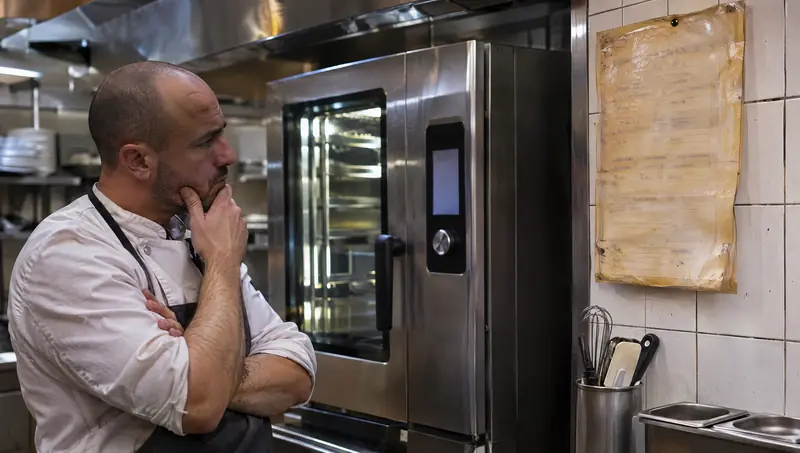
An outdated procedure is more dangerous than a missing one
A missing procedure makes people ask; an outdated one gets followed with confidence. Date every sheet, name an owner, take old printed copies down.
Hygiene and compliance
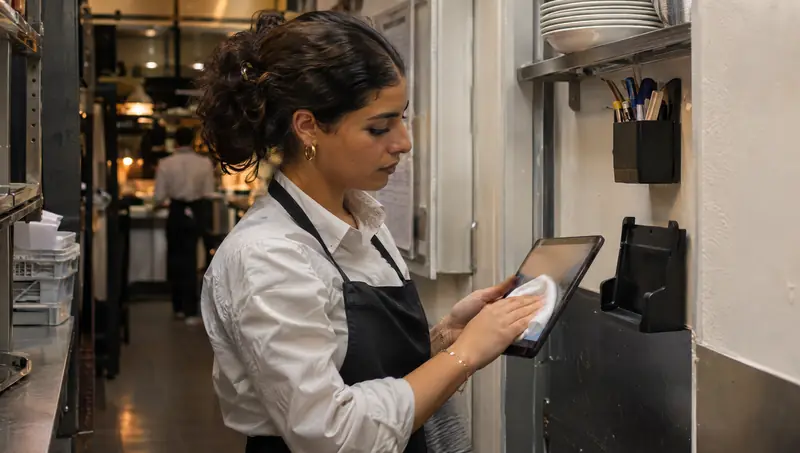
Hygiene of shared equipment in restaurants
Tablets, probes, earpieces: anything that changes hands gets cleaned at a set time by a named person. Anything that touches the ear stays personal.
Hygiene and compliance
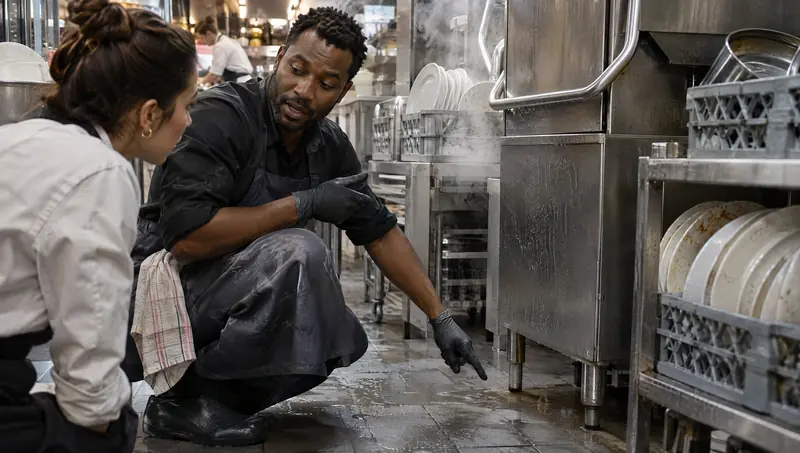
Reporting a breakdown without leaving your station
Tell San about the breakdown from your station, it drafts the report (equipment, time, facts), you confirm, the manager sees it. Nothing gets lost on the way.